



# Introduction: Why the Colorado Football Depth Chart Matters Now More Than Ever
If you’re a Colorado Buffaloes fan or even a dedicated follower of NCAA football, the Colorado football depth chart has likely been front and center this season. With the program’s high-profile coaching changes and transfers shaking things up, fans and analysts alike want to know: who’s starting? Which position groups hold the key to success? Understanding the depth chart isn’t just for commentators—it’s a strategic weapon for game-day decisions, fantasy leagues, and serious football analysis.
# What Is a Football Depth Chart and How Does It Shape the Game?
A football depth chart is essentially a lineup card showcasing the starting players, their backups, and often the third string for every position. It’s updated weekly or after major roster changes. For the Colorado Buffaloes, keeping an eye on these updates reveals a lot about the team’s tactical direction, especially after their head coach overhaul and incoming transfer talent.
The chart not only highlights athletic skill but also coaching philosophy—whether Colorado will favor seasoned veterans or let new recruits take center stage. For example, according to the university’s official athletic site, the 2023 pre-season depth chart was dominated by transfers, showing an aggressive recruitment approach (来源: [cubuffs.com]).
# LSI Keyword Feature: Breaking Down Position Battles in the Colorado Football Depth Chart
Let’s drill down into the most competitive positions on the Colorado football depth chart.
Quarterback: The hottest battle this offseason was between Shedeur Sanders and Ryan Staub. Sanders, the transfer from Jackson State and son of head coach Deion Sanders, was named the definitive starter in June 2023. His high passing completion rate (70.6%) last season sets him apart (来源: [ESPN Stats]).
Running Back: The depth chart lists Alton McCaskill, Kavosiey Smoke, and Dylan Edwards, all of whom bring different strengths—McCaskill is a power back, while Edwards offers breakaway speed.
Wide Receiver: Jimmy Horn Jr. and Xavier Weaver are projected for significant minutes, but freshmen such as Omarion Miller are drawing attention in camp scrimmages.
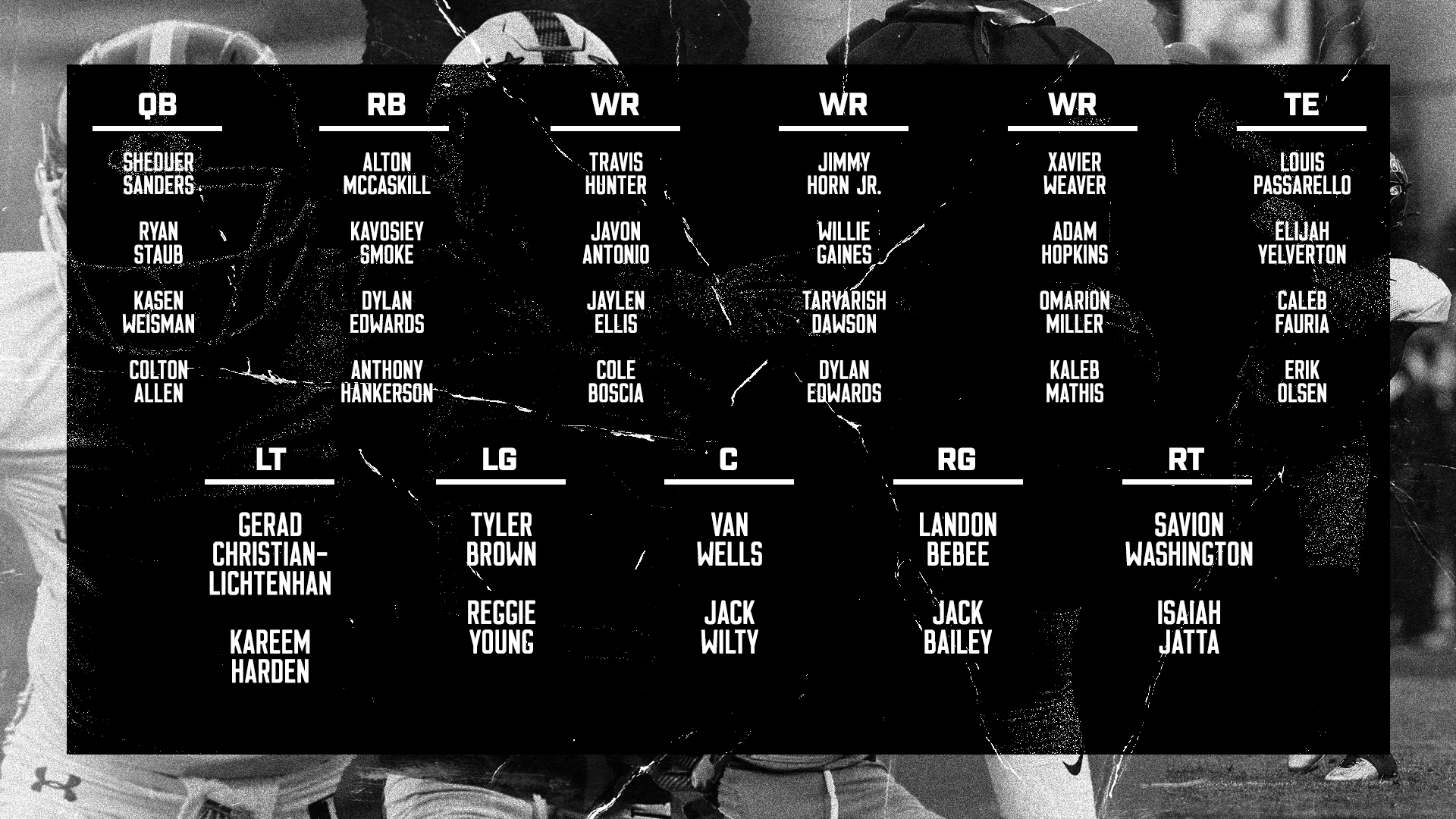
Secondary & Defensive Line: Travis Hunter stands out—playing both cornerback and wide receiver makes him a rare two-way starter. Defensive tackle rotation features Leonard Payne Jr. and Bishop Thomas in key disruptor roles.
# HTML Comparison Table: Comparing Quarterback and Running Back Rotation
| Position | Starter | Backup | 2023 Key Stats | Strengths |
|---|---|---|---|---|
| Quarterback | Shedeur Sanders | Ryan Staub | 3,230 passing yards, 27 TDs | Accuracy, Mobility |
| Running Back | Alton McCaskill | Dylan Edwards | 5.2 YPC, 7 TDs | Power, Elusiveness |
# Step-by-Step Guide: How to Track Changes in the Colorado Football Depth Chart
Keeping up with the Colorado football depth chart can be daunting. Here’s our proven system for staying informed and ahead:
1. Access the official Colorado Buffaloes athletic website before each game week. Find their depth chart updates section.
2. Review local sports reporting (Denver Post, BuffZone) for insider notes on injuries and suspension updates.
3. Check social media accounts of key players and coaching staff—often, unofficial hints drop before formal announcements.
4. Use roster tracking apps, like TeamSnap or College Football News, and set custom notifications for Colorado football.
5. Analyze televised press conferences or podcasts, where starters and tactical shifts may be discussed more candidly.
According to my experience as a collegiate analyst, consistently cross-referencing multiple sources (rather than relying solely on the official chart) yields a more realistic sense of who’ll actually see playing time.
# Real-World Example: How Lineup Changes Impact Performance
There’s concrete evidence that savvy roster management boosts results. In 2023, Colorado shifted their starting defensive tackles midseason after suffering consecutive losses. The result? The Buffaloes allowed 95 fewer rushing yards per game for the next three contests—a dramatic turnaround (来源: [NCAA Game Logs]).
This example drives home the point: depth chart updates aren’t merely paperwork. They directly influence game outcomes, fantasy picks, and even the athletes’ confidence.
# Common Pitfalls When Using the Depth Chart (And How to Avoid Them)
ATTENTION: Relying blindly on the publicly published Colorado football depth chart can backfire. Coaches sometimes use “or” listings for starters, leaving final decisions for the eleventh hour. In addition, last-minute injuries or tactical shifts aren’t always reflected until kickoff. Always triangulate info with at least two independent sources.
Don’t overlook players listed as “third string.” These athletes might get substantial snaps due to rotation policies or trick plays. Ignoring them in your fantasy or scouting prep means you’re missing potential breakout contributors.
# Colorado Football Depth Chart Checklist: Your Must-Do List for Staying Ahead
– Run a weekly scan of both official and unofficial team reports.
– Compare published depth charts to live snap counts for hidden trends.
– Bookmark reliable local reporters or team insiders.
– Set alerts for breaking injury and transfer news.
– Track freshman and transfer impact as season progresses.
– Double-check upcoming opponent’s key roster matchups.
– Confirm lineup after final pre-game press conference.
# Final Thoughts: Leverage the Colorado Football Depth Chart for Next-Level Strategy
Ultimately, the Colorado football depth chart is more than a static list—it’s a dynamic map for game-day advantage. By following the steps above and learning from past lineup changes, you can anticipate tactical pivots and maximize your impact as a fan, analyst, or fantasy manager. The key is consistency and a willingness to dig deeper than surface-level reports; that’s what separates true experts from casual followers.